Home › Services › Appliance Leak Cleanup
A failed washing-machine hose, a leaking dishwasher, or a ruptured water heater can put gallons of water into your floors and walls in minutes. Fast extraction, proper structural drying, and documentation built for the insurance claim. Serving Sugar Land and Fort Bend County.
Appliance leaks are one of the most common sources of household water damage, and they tend to be worse than they look because the water goes where you can't see it. The most frequent culprits are washing machines — a supply hose bursts and pumps water across the laundry room — dishwashers that leak under the cabinet run, refrigerator ice-maker lines that drip behind the fridge for weeks, and water heaters that finally give out and empty their tank across the garage or utility closet. Whatever the source, the response is the same: stop the water, get it out, and dry the structure completely before it turns into a mold problem.
Burst supply hoses and drain backups that flood the laundry area fast.
Slow leaks under the cabinet run that swell the flooring and kick-plates.
A tank that ruptures can release its entire volume across a garage or closet.
Small drips behind the fridge that quietly soak the floor and subfloor.
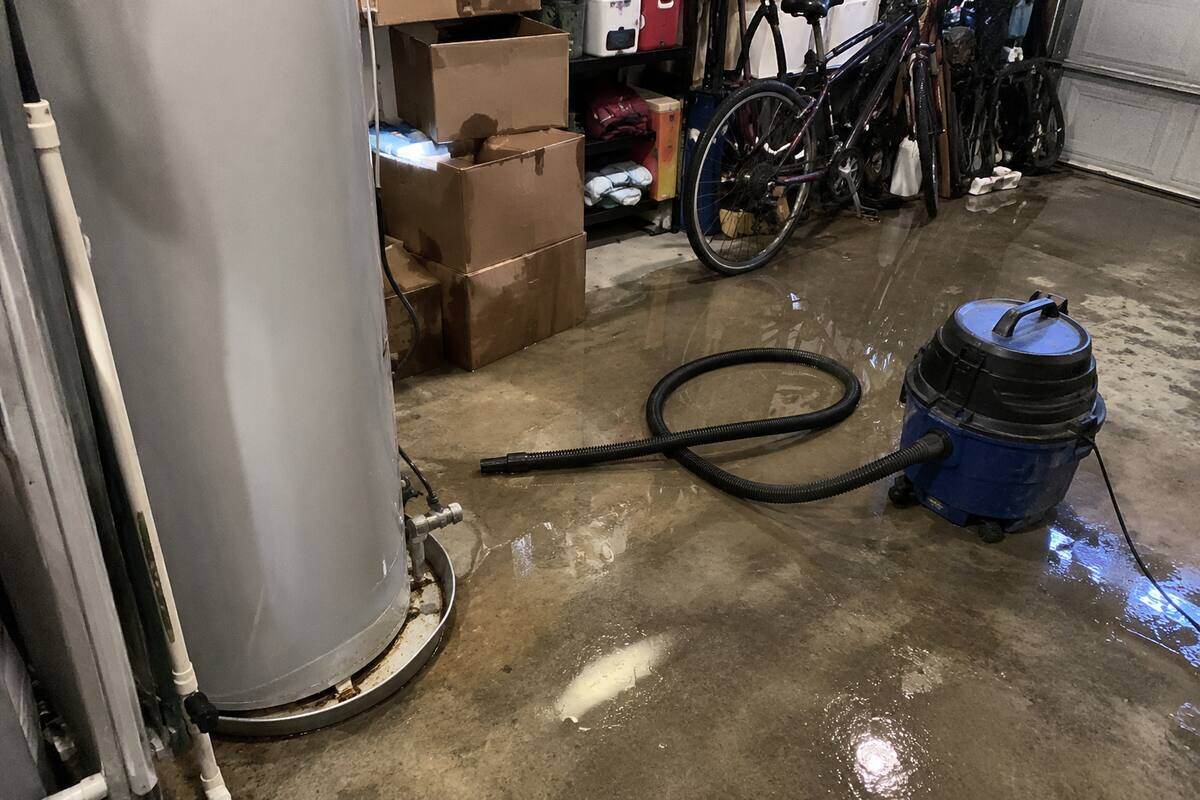
The instinct after an appliance leak is to mop it up and move on. The trouble is that water spreads sideways and downward through materials — wicking under vinyl and laminate, soaking into the bottom of drywall and baseboards, and creeping into the particleboard base of cabinets. By the time the visible floor looks dry, moisture is often still trapped in places a towel never reached, and in Houston's humid climate that hidden moisture is exactly what mold needs to take hold within a day or two. That's why "dry" is never judged by eye. Moisture meters, and thermal imaging where needed, find how far the water actually traveled; air movers and dehumidifiers then run until the structure reads dry — following the drying standards taught in IICRC water-damage and structural-drying certification (WRT and ASD), which is the meaningful credential in this trade since Texas doesn't license water-damage contractors.
Confirm the source is shut off and map how far the water spread with moisture readings.
Remove standing water, then run air movers and dehumidifiers to dry the structure to standard.
Confirm dry readings and hand you thorough documentation for your insurance claim.
Shut off the water supply to the appliance and, if safe, the power to that area. Then call for extraction as soon as possible — the faster standing water is removed and drying begins, the less it soaks into flooring, walls, and cabinets. Mop up what you safely can and move valuables off the wet floor.
Often yes. Appliance leaks wick under flooring, into baseboards, and behind cabinets where a towel can't reach, and that hidden moisture is what grows mold. Moisture meters show whether water spread beyond what's visible, before anything is called dry.
Sudden, accidental failures — a burst supply hose, a failed water heater — are often covered, while long-term slow leaks may not be. The damage gets documented thoroughly with moisture readings and photos, exactly what an adjuster needs, and can work with your insurer's process.
Water damage is time-sensitive, so we prioritize fast response across Sugar Land and Fort Bend County. The sooner extraction and drying start, the more of your flooring, drywall, and cabinetry can be saved rather than replaced.
Fast extraction and proper drying across Sugar Land & Fort Bend County.
Call (346) 375-5170 Sugar Land