Home › Services › Mold: Assessment vs. Remediation
Mold work in Texas is licensed and regulated — and understanding how it's split up protects you from a common conflict of interest. Here's the honest version of how it works, and how the fastest way to avoid a mold project is to never let one start. For Sugar Land and Fort Bend County homeowners.
In Texas, mold assessment and mold remediation are regulated by the Texas Department of Licensing and Regulation (TDLR), and they are two genuinely different roles. A mold assessor is the diagnostician: they inspect, test, identify the moisture source, and write a remediation protocol that defines the scope of work and the criteria the job must meet to be considered clean. A mold remediator is the one who does the physical work — containment, removal, cleaning — following that protocol. On regulated projects, Texas requires these two parties to be independent of each other. That independence is the whole point: the company being paid to remove mold shouldn't also be the company that decides how much mold there is and when the job is "done." Keeping the referee separate from the player protects the homeowner.
This is worth knowing because it tells you how to spot a questionable offer. If a single company wants to both "test" your home for mold and then "remediate" it on the same job, that arrangement runs against the intent of the rules for licensed work — and it's exactly the conflict the independence requirement exists to prevent. A trustworthy company will be upfront about which role it can fill and will point you to an independent party for the other.
Water damage and mold are two different lanes, and this site sits squarely in the first one: the emergency response that comes before mold is ever in the picture — extracting water fast and drying the structure to a verified-dry standard so mold doesn't get the moisture it needs to grow. When a situation does call for formal mold assessment or licensed remediation, that is regulated work belonging to a licensed assessor or remediator, and nothing here pretends otherwise — the honest answer comes up front, along with a connection to independent, appropriately licensed professionals, so the assessor-remediator independence stays intact. That plainness is deliberate: since Texas doesn't license general water-damage contractors, being straight about where the line falls — and about how mold licensing actually works — is exactly the standard that matters.
Here's the part most homeowners don't hear until it's too late: the overwhelming majority of household mold problems trace back to moisture that sat too long. Mold spores are always present; what they need to bloom is water and time. In Sugar Land's climate — high humidity, homes on slabs that hold moisture, and a real flood-risk profile across Fort Bend County — that time window is short, often just a day or two after a leak or flood. So the single most effective mold decision you can make is to respond to water damage fast and dry everything thoroughly the first time. A leak extracted and dried within hours rarely becomes a remediation project. A leak left to "dry on its own" over a week frequently does.
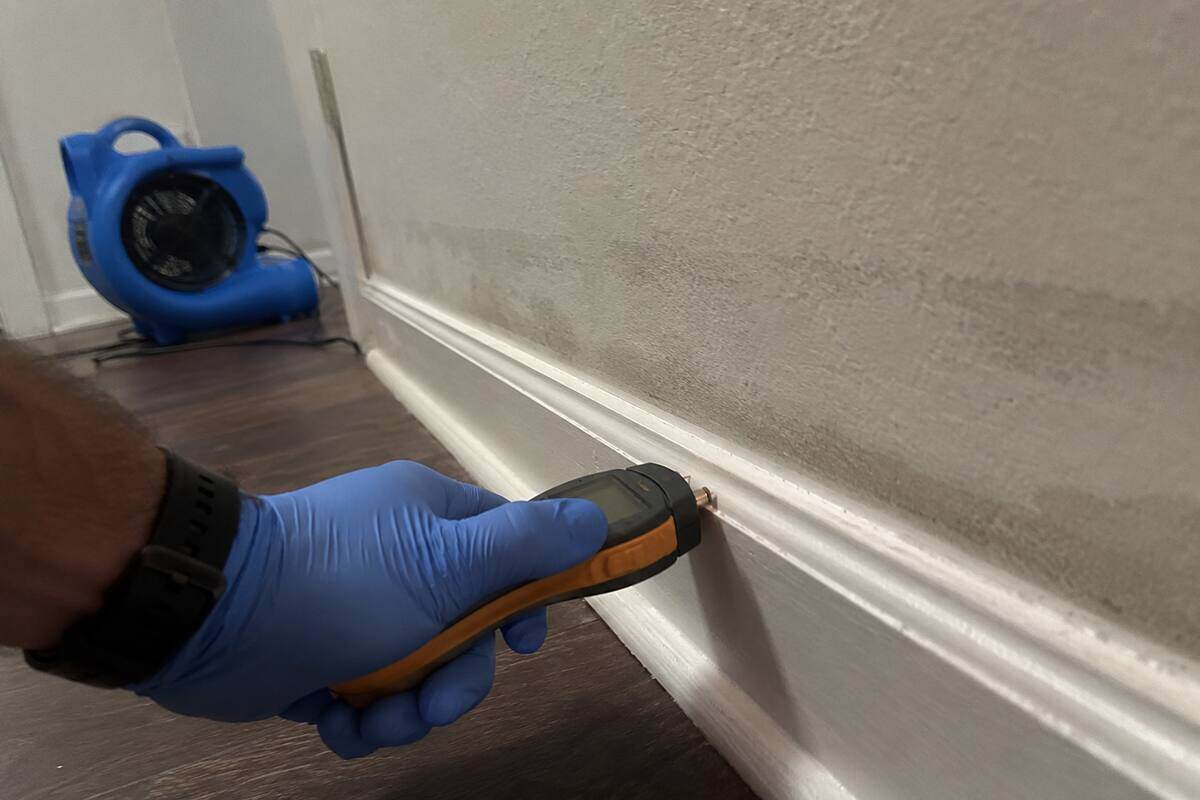
Often the first sign of hidden moisture and early growth behind a wall or under a floor.
Staining or spotting on drywall, ceilings, or baseboards near a past leak.
An area that never quite seems to dry out points to an ongoing moisture source.
If you're seeing these, the priority is finding and stopping the moisture source and drying the area properly. If testing or remediation turns out to be warranted, we'll help you get to the right independent, licensed professionals — and if it's caught early enough, thorough drying may be all it takes.
Yes. Mold assessment and remediation are licensed and regulated by the Texas Department of Licensing and Regulation (TDLR). Larger mold projects generally require licensed professionals, with specific rules about who can do what — including a rule that keeps the party inspecting for mold independent from the party removing it.
A mold assessor inspects, tests, and writes the protocol — diagnosing the problem and defining the scope and clearance criteria. A remediator performs the removal according to that protocol. They're distinct licensed roles, and on regulated projects Texas requires them to be independent of each other.
For regulated projects in Texas, generally no — the assessor and remediator on the same project must be separate to avoid a conflict of interest. Be cautious of any company offering to both "test" and "remove" your mold on the same job.
Speed. Mold needs moisture, and in Houston's humidity it can begin within a day or two. The most reliable way to avoid a remediation project is to extract water and dry the structure to a verified-dry standard quickly — which is the whole point of the mitigation phase.
Water damage caught early rarely becomes a mold project. Sugar Land & Fort Bend County.
Call (346) 375-5170 Sugar Land